

Lip and facial filler
Lips, cheeks, chin and jawline — and dissolving, if you've had work done elsewhere that you're not happy with. The goal is always that nobody can tell you've had anything done.

Every treatment starts with a consultation
A consultation comes first and is included — you are not charged extra for it. Before any treatment begins we go through your health and medical history, any medication, allergies and previous work, and we check that what you are asking for is safe and suitable for you. That applies to every service here, not only the injectables.
It is also where we agree the plan: what we are treating, in what order, and what it will cost. Nobody is injected on the day they first walk in without that conversation.
Two kinds of filler
Almost everything we do with filler falls into one of two jobs. Knowing which one you want is the fastest way to a result you are happy with.
Restoring
Putting back what has gone. Faces lose fat and volume with age, and it rarely goes evenly — cheeks flatten, the midface drops, shadows appear, and the jawline softens because the support above it has given way. Restoring filler rebuilds that structure so the face reads as it used to rather than as a different face.
This is also where facial balancing sits: treating the face as a whole rather than one feature at a time, so a chin, a jawline and a set of cheeks work together instead of pulling against each other. Where more than one area is involved we will talk you through a plan and the package options for it at your consultation, rather than selling you one syringe at a time.
Enhancing
Improving the features you already have. Nothing has been lost here — you simply want more definition, better balance, or a little more of something you like. Lip enhancement is the obvious one, but it covers chin projection, a sharper jawline and cheek definition too.
Enhancing usually needs less product than restoring, and it is the one where starting conservatively matters most.
What filler actually does
Dermal fillers are gels based on hyaluronic acid — a substance your body already produces and uses to hold water in the skin. Injected into the right place, filler restores volume that's been lost, defines an edge that's softened, or balances something that was never quite symmetrical in the first place.
It's the opposite job to anti-wrinkle injections. Those relax muscles; filler adds structure. Plenty of people end up having a little of both, but you don't need to decide that today.
Lip filler
By far the most asked-about treatment, and the one where the consultation matters most. Lips can be hydrated, lightly volumised, have their shape balanced, or have a defined border added — and those are all different results requiring different amounts.
Most people start with 0.5ml to 1ml. Starting conservatively and building at a second appointment nearly always looks better than going big in one go, and it's much easier to add than to take away. Numbing cream is applied as standard and left to work properly before anything starts.
Expect swelling for the first 24 to 48 hours — sometimes a lot of it. Lips always look bigger immediately afterwards than they will at two weeks, which is the point at which they've genuinely settled. Don't judge the result before then, and don't book this the week of an event.
Cheeks, chin and jawline
Facial filler placed higher up can lift and support the whole lower face. Cheek filler restores the volume that naturally flattens with age; chin and jawline filler sharpens definition and can improve how the profile reads from the side.
These are structural treatments and often make more difference than people expect, because they address why the lower face has softened rather than chasing the result at the surface.
Dissolving
Hyaluronic acid filler can be removed using an enzyme that breaks it down. People come for this for all sorts of reasons: migration, lumps, asymmetry, an over-filled look, or simply wanting to start again from scratch with a clean slate.
You don't need to have had the original work here, and you won't get a lecture about it. A patch test is required first, and dissolving is usually followed by a four-week wait before anything new is placed.
At a glance
- Appointment: 45–60 minutes
- Results: immediate, settled at 2 weeks
- Lasts: typically 6–12 months
- Downtime: swelling for 24–48 hours
- Numbing cream: included as standard
- Age: 18+ only, ID required
- Prices: Lip filler £100–£140, facial filler from £130 — full list
Aftercare
- No make-up on the area for 24 hours
- No exercise, heat or alcohol for 24 hours
- Sleep slightly elevated for the first night
- Don't massage unless you've been told to
- No facials or dentistry for two weeks
- Call straight away about unusual pain or blanching
Results
Before and after
Lip filler carried out at the studio. Taken at the appointment, with no editing and no filters — and cropped so nobody is identifiable.
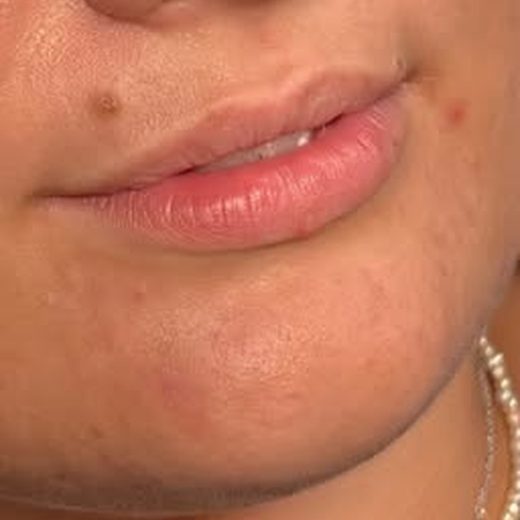
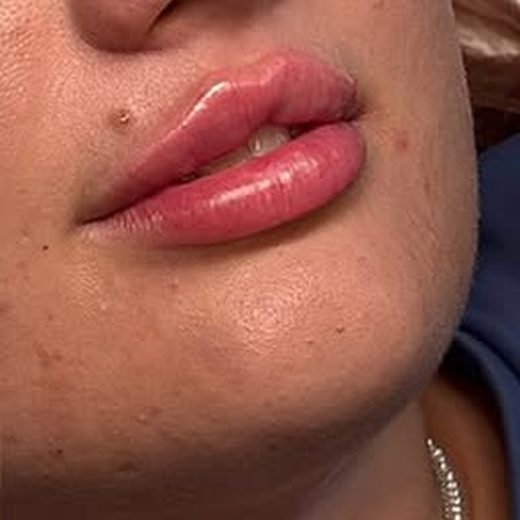
Definition added to the border with the natural lip shape kept.

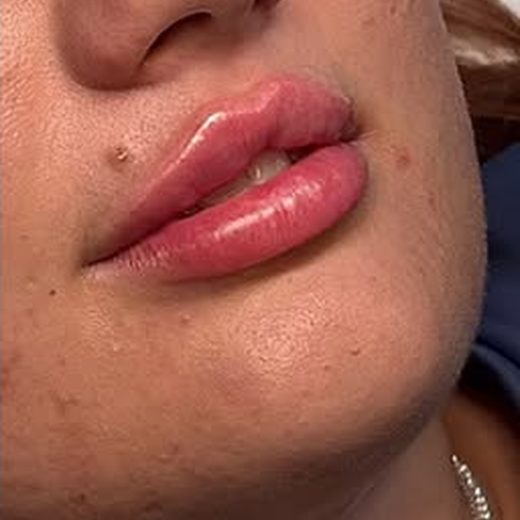
Volume balanced between the upper and lower lip.
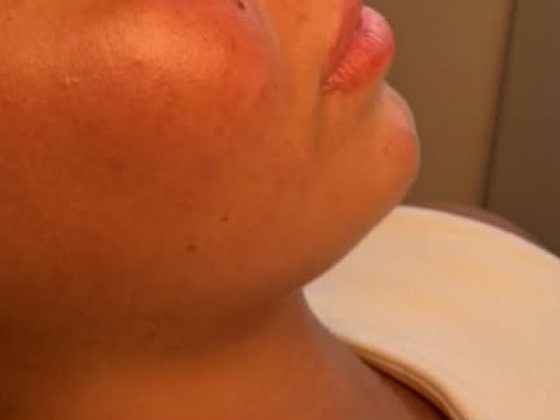
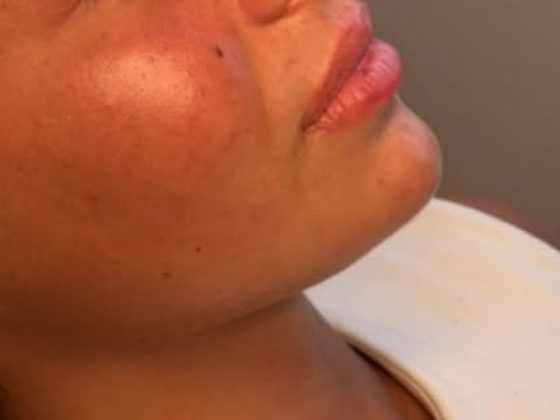
Profile projection, photographed at the appointment.
Immediate post-treatment photographs. Lips swell for 24 to 48 hours, so the settled result at two weeks is softer than these show. Individual results vary.
Common questions
Will it look obvious?
How much do I need?
Does it hurt?
What's filler migration?
Can I have it dissolved if I hate it?
Ready when you are
Book online in under a minute, or message if you'd rather talk it through first. Every new aesthetics client starts with a consultation — no pressure, no hard sell.